The Indian Constitution is a dynamic and flexible document that allows the country to evolve with changing political, social, and administrative needs. One such provision that ensures this adaptability is Article 4. It works closely with Articles 2 and 3 and provides Parliament with the authority to make laws for the formation and alteration of states.
🔷 What is Article 4 of the Indian Constitution?
Article 4 states that any law referred to in Article 2 (admission or establishment of new states) or Article 3 (formation of new states and alteration of areas, boundaries, or names of existing states) may include supplemental, incidental, and consequential provisions.
Importantly, Article 4 clarifies that such laws will not be considered amendments to the Constitution under Article 368.
🔷 Key Features of Article 4
✔️ 1. No Need for Constitutional Amendment
One of the most important aspects of Article 4 is that laws made under Articles 2 and 3 do not require a special constitutional amendment procedure. This means Parliament can pass such laws by a simple majority.
✔️ 2. Supplemental and Consequential Provisions
Article 4 allows Parliament to include additional provisions in such laws, such as:
Representation in Parliament
Adjustment of boundaries
Allocation of assets and liabilities
✔️ 3. Flexibility in Governance
This article ensures flexibility in governance by making it easier to reorganize states as per administrative and political needs.
🔷 Importance of Article 4
Article 4 has played a significant role in shaping modern India. It has enabled:
Creation of new states like Chhattisgarh, Jharkhand, and Telangana
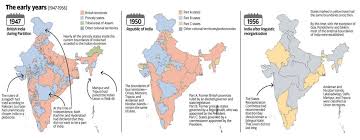
Reorganization of states based on linguistic and administrative needs
Smooth transition during territorial changes
Without Article 4, every such change would require a lengthy and complex amendment process.
🔷 Examples of Article 4 in Action
Some notable examples where Article 4 has been applied include:
The States Reorganisation Act, 1956
Formation of Telangana in 2014
Creation of Uttarakhand, Jharkhand, and Chhattisgarh in 2000
These changes were made efficiently due to the flexibility provided by Article 4.
🔷 Relationship with Articles 2 and 3
Article 2: Deals with admission or establishment of new states
Article 3: Deals with formation and alteration of existing states
Article 4: Provides the legal framework to implement laws under Articles 2 and 3
Together, these articles form the backbone of India’s territorial organization.
🔷 Conclusion
Article 4 of the Indian Constitution is a crucial provision that ensures the country can adapt its internal boundaries and administrative structure without unnecessary legal hurdles. By allowing Parliament to make changes through simple legislation, it supports the dynamic nature of Indian democracy.
It highlights the foresight of the Constitution makers, ensuring that India remains united yet flexible in its governance.
Technology
Article 4 of the Indian Constitution Explained – Laws Related to Formation of States in India
Tags
Article 4 Indian Constitution
Article 4 explained
formation of states in India
reorganization of states India
Indian Constitution Article 4 summary
constitutional provisions for state formation
Parliament powers India
Article 2 and 3 and 4 Constitution
India that is Bharat constitution
Indian polity notes
5,777
Views
404
Words
2 min read
Read Time
Apr 2025
Published